

The average bathroom renovation in the UK costs around £4,500 to £11,000, although a basic refresh can cost less and a high-end bathroom can exceed £20,000. The final price depends on the size of the bathroom, the condition of the existing space, whether the layout changes, the quality of materials and fittings, and labour costs in your area.
For homeowners in London and the South East, costs can be higher because labour and trade rates are generally more expensive.
Quick Answer: How Much Does a Bathroom Renovation Cost?
As a general guide, you can expect to spend:
- £2,000–£4,500 for a basic bathroom refresh with limited structural or plumbing work.
- £4,500–£9,000 for a standard bathroom renovation using mid-range fittings and finishes.
- £10,000–£20,000+ for a premium bathroom with higher-quality fixtures, bespoke storage, extensive tiling or layout changes.
- £20,000+ for a luxury bathroom involving premium materials, a wet room, underfloor heating, bespoke joinery or significant structural work.
These figures are guides rather than fixed prices because every bathroom renovation is different.
What Is Included in a Bathroom Renovation?
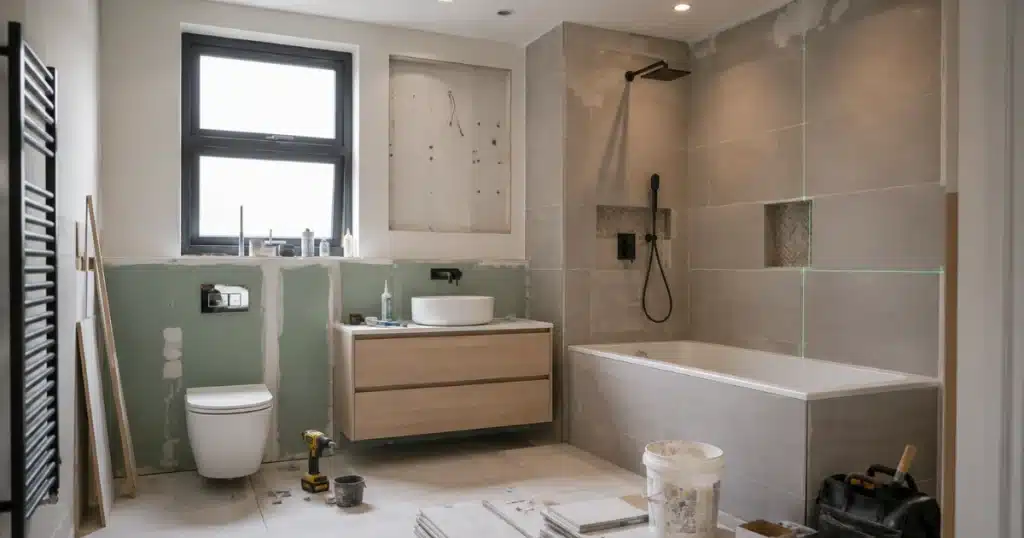
A bathroom renovation can involve much more than replacing the toilet, bath and basin.
Depending on the scope of your project, the work may include:
- Removing the existing bathroom suite and finishes.
- Installing a new toilet, basin, bath or shower.
- Replacing or upgrading plumbing.
- Installing new electrical points and bathroom lighting.
- Improving ventilation and installing an extractor fan.
- Waterproofing wet areas.
- Removing and replacing wall and floor tiles.
- Installing new flooring.
- Fitting bathroom furniture and storage.
- Decorating walls and ceilings.
- Installing mirrors, accessories and other finishing details.
The more elements you change, the greater the overall cost is likely to be.
Bathroom Renovation Cost by Project Type
Basic Bathroom Refresh: £2,000–£4,500
A basic renovation is suitable when the existing bathroom layout is already functional and major plumbing or structural changes are unnecessary.
It may include:
- Replacing the toilet and basin.
- Installing a new bath or shower.
- Replacing taps and accessories.
- Updating flooring.
- Painting or partially tiling the walls.
- Replacing lighting and ventilation.
- Making minor cosmetic improvements.
Keeping the existing layout can help keep this type of project relatively affordable.
Standard Bathroom Renovation: £4,500–£9,000
A standard renovation usually involves a more complete transformation of the room.
It may include a new bathroom suite, full or substantial tiling, updated lighting, improved ventilation, new flooring and some plumbing alterations.
This is a common budget range for homeowners who want a modern, practical family bathroom without specifying luxury materials throughout.
Premium Bathroom Renovation: £10,000–£20,000+
A premium bathroom renovation typically involves higher-quality products and more detailed installation work.
You may choose:
- A walk-in shower.
- Large-format or premium tiles.
- Bespoke vanity units.
- Designer sanitaryware.
- Brushed brass or other specialist finishes.
- Underfloor heating.
- A heated mirror.
- Improved lighting.
- Custom storage.
- High-quality stone or stone-effect surfaces.
The cost can increase considerably when several premium features are combined.
What Are the Biggest Bathroom Renovation Costs?
Several parts of the project can have a significant effect on your final budget.
Bathroom Suite and Fixtures
The toilet, basin, bath and shower can range from relatively affordable products to high-end designer fittings.
A standard toilet, basin and bath or shower arrangement may cost around £600 to £2,500, while premium products can cost considerably more.
Choosing good-quality fittings does not necessarily mean buying the most expensive products. The priority should be durability, suitability and compatibility with the overall design.
Labour and Installation
Labour can represent a significant part of a bathroom renovation budget because several different trades may be involved.
Depending on the project, you may need:
- A plumber.
- An electrician.
- A tiler.
- A plasterer.
- A carpenter or joiner.
- A decorator.
- A bathroom installer.
The total labour cost depends on the size and complexity of the project and how long the work takes.
Tiling
Tiling costs depend on the size of the bathroom, the amount of surface being tiled, the tile material and the complexity of the installation.
Simple ceramic tiles can be relatively affordable, while porcelain, natural stone, large-format tiles and intricate patterns can increase both material and installation costs.
Tiling costs may also rise when walls need preparation before the tiles can be installed.
Plumbing
Keeping the toilet, basin, bath and shower in approximately the same positions can reduce plumbing costs.
Moving drainage and water connections can require additional pipework and installation work.
As a general guide, significant plumbing changes could add £500 to £1,500 or more, depending on the complexity of the work.
Electrical Work
Bathroom electrical work may include new lighting, extractor fans, heated mirrors, shaver sockets and other electrical installations.
Electrical work in bathrooms must be carried out safely and in accordance with the relevant requirements because bathrooms are wet environments.
Waterproofing
Waterproofing is an important part of a bathroom renovation and should not be treated as an area where you can safely cut costs.
Correct preparation and waterproofing help protect walls, floors and the structure of your property from water damage.
If you are installing a walk-in shower or wet room, the waterproofing requirements can be more extensive.
Does the Size of the Bathroom Affect the Cost?
Yes, but size is not the only factor.
A larger bathroom generally requires more flooring, wall covering and materials. However, a small bathroom can sometimes be more expensive per square metre because it may require detailed cutting, awkward access and careful fitting around existing fixtures.
The complexity of the layout is often more important than the room’s floor area alone.
Does Changing the Bathroom Layout Increase the Cost?
Changing the layout can significantly increase the renovation cost.
For example, keeping the existing toilet in place is usually simpler than moving it to another part of the room because the new position may require changes to drainage and plumbing.
You may also need to alter:
- Water supply pipes.
- Waste pipes.
- Electrical connections.
- Wall structures.
- Flooring.
- Ventilation.
If your existing layout works well, keeping the main fixtures in their current positions can be one of the easiest ways to control the budget.
However, you should not keep a poor layout simply to save money. If moving a fixture makes the bathroom significantly more practical, the additional cost may be worthwhile.
How Much Does Bathroom Tiling Cost?
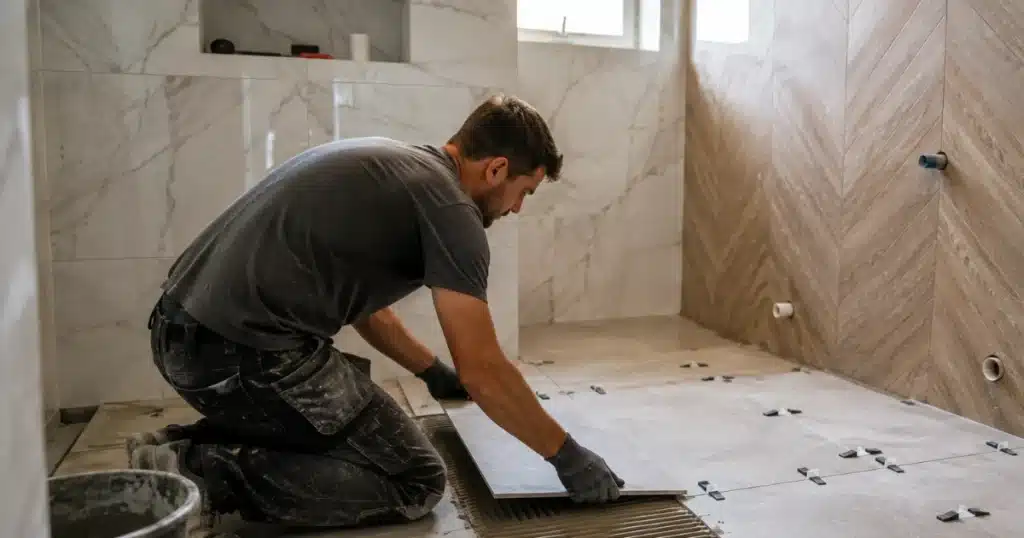
Tiling costs vary according to the tile, installation method and area being covered.
A bathroom renovation may involve:
- Floor-only tiling.
- Shower-area tiling.
- Half-height wall tiling.
- Full-height wall tiling.
- Large-format tiles.
- Decorative feature tiles.
Material costs can range from affordable ceramic options to considerably more expensive porcelain and natural stone.
The installation itself can also become more expensive when the design involves intricate patterns, small tiles, uneven surfaces or extensive wall preparation.
How Much Does a Walk-In Shower Cost?
A walk-in shower can cost more than a basic shower enclosure because it may require a larger shower area, a suitable shower tray or wet-room system, glass screening, waterproofing and additional plumbing.
The final cost depends on:
- The size of the shower.
- The type of glass screen.
- The shower system.
- Whether the existing bath is removed.
- Whether the drainage needs changing.
- The waterproofing system.
- The quality of the tiles and finishes.
A walk-in shower can be a practical choice, particularly when accessibility and ease of use are important.
How Much Does a Bathroom Renovation Cost in London?
Bathroom renovation costs in London are often higher than national averages because of increased labour, transport, access and trade costs.
The exact price will depend on your property and the scope of the work.
For a London bathroom renovation, it is particularly important to obtain a detailed quotation that clearly explains what is included.
Your quotation should account for:
- Removal of the existing bathroom.
- Waste disposal.
- Plumbing.
- Electrical work.
- Waterproofing.
- Tiling.
- Installation.
- Fixtures and fittings.
- Decorating.
- Final finishing.
A low initial quote can become expensive if important parts of the project have been excluded.
What Can Make a Bathroom Renovation More Expensive?
Several decisions can quickly increase the final cost.
Moving Plumbing
Relocating toilets, showers and basins can require additional pipework and drainage changes.
Choosing Premium Materials
Natural stone, specialist tiles, designer sanitaryware and bespoke furniture can significantly increase the material budget.
Extensive Tiling
Full-height tiling across multiple walls requires more materials and installation time than limited splashback or shower-area tiling.
Structural Changes
Removing walls, altering openings or changing the structure of the room can introduce additional professional and construction costs.
Hidden Problems
Once the existing bathroom is removed, problems such as water damage, poor previous workmanship, damaged flooring or outdated pipework may become visible.
This is why having a contingency budget is sensible.
How Can You Reduce Bathroom Renovation Costs?
You do not necessarily need to compromise on quality to control the cost.
Consider these approaches:
- Keep the existing bathroom layout where it already works well.
- Compare several suppliers before choosing fixtures and fittings.
- Spend more on items that are difficult to replace and save on easily changed accessories.
- Choose durable mid-range tiles rather than automatically selecting premium materials.
- Avoid unnecessary structural changes.
- Plan the complete bathroom before ordering materials.
- Allow a contingency for unexpected work rather than using your entire budget on finishes.
- Get a detailed quotation that separates labour and materials.
The most effective way to control costs is usually to make decisions before work starts rather than changing the design during construction.
Is It Worth Renovating a Bathroom?
A bathroom renovation can be worthwhile if the existing space is outdated, damaged, difficult to use or no longer meets your household’s needs.
A well-planned renovation can improve:
- Everyday comfort.
- Storage.
- Layout and accessibility.
- Energy and water efficiency.
- Appearance.
- Ventilation.
- Property appeal.
You should not renovate purely because a particular style is currently fashionable. A practical layout and durable materials are likely to provide more lasting value than trends that quickly become outdated.
What Should You Budget for Unexpected Bathroom Costs?
It is sensible to keep some money aside for unforeseen work.
Once an old bathroom is stripped out, you may discover:
- Water damage behind walls.
- Damp or mould.
- Damaged flooring.
- Old or unsuitable plumbing.
- Poor previous installation work.
- Electrical issues.
- Uneven walls or floors.
Having a contingency means these problems can be addressed without completely disrupting your renovation budget.
How Long Does a Bathroom Renovation Take?
A typical bathroom renovation can take around one to two weeks of on-site work, although more complex projects can take longer.
The timeline depends on:
- The size of the bathroom.
- The amount of demolition required.
- Whether the layout is changing.
- Plumbing and electrical work.
- Waterproofing requirements.
- Tiling and flooring.
- Availability of materials.
- Any unexpected problems discovered during the renovation.
Good planning before work begins can help reduce delays.
Should You Hire a Professional for a Bathroom Renovation?
A bathroom combines plumbing, electrical work, waterproofing, tiling and specialist installation, so professional installation is usually the safest approach for a complete renovation.
Using experienced tradespeople can help ensure that:
- Plumbing is installed correctly.
- Waterproofing is properly completed.
- Electrical work is carried out safely.
- Fixtures are installed correctly.
- The finished bathroom meets the required standards.
- Problems are identified before they become expensive repairs.
Attempting specialist work without the appropriate knowledge can create problems that cost more to correct later.
Final Answer: What Should You Expect to Pay?
For a typical UK bathroom renovation, a realistic starting point is around £4,500 to £11,000. A basic refresh can cost around £2,000 to £4,500, while a premium renovation can reach £10,000 to £20,000 or more.
For homeowners in London, the final cost may be higher because of local labour and project costs.
The most important factor is not simply the size of your budget but how effectively you plan the work. Keeping a practical layout, choosing durable materials and obtaining a detailed quotation can help you create a bathroom that looks good, works well and remains within a realistic budget.