
Yes, you can usually live in your house during an extension, but whether it is practical depends on the size and location of the project. A small single-storey extension may allow you to stay with relatively little disruption, while a large extension involving the kitchen, bathrooms, heating or most of the ground floor can make living at home much more difficult.
Before deciding, you should consider your access to essential rooms, the level of dust and noise, safety, working hours, the length of the project and whether your builder can separate the construction area from the rest of your home.
Can you live in a house during extension or renovations?

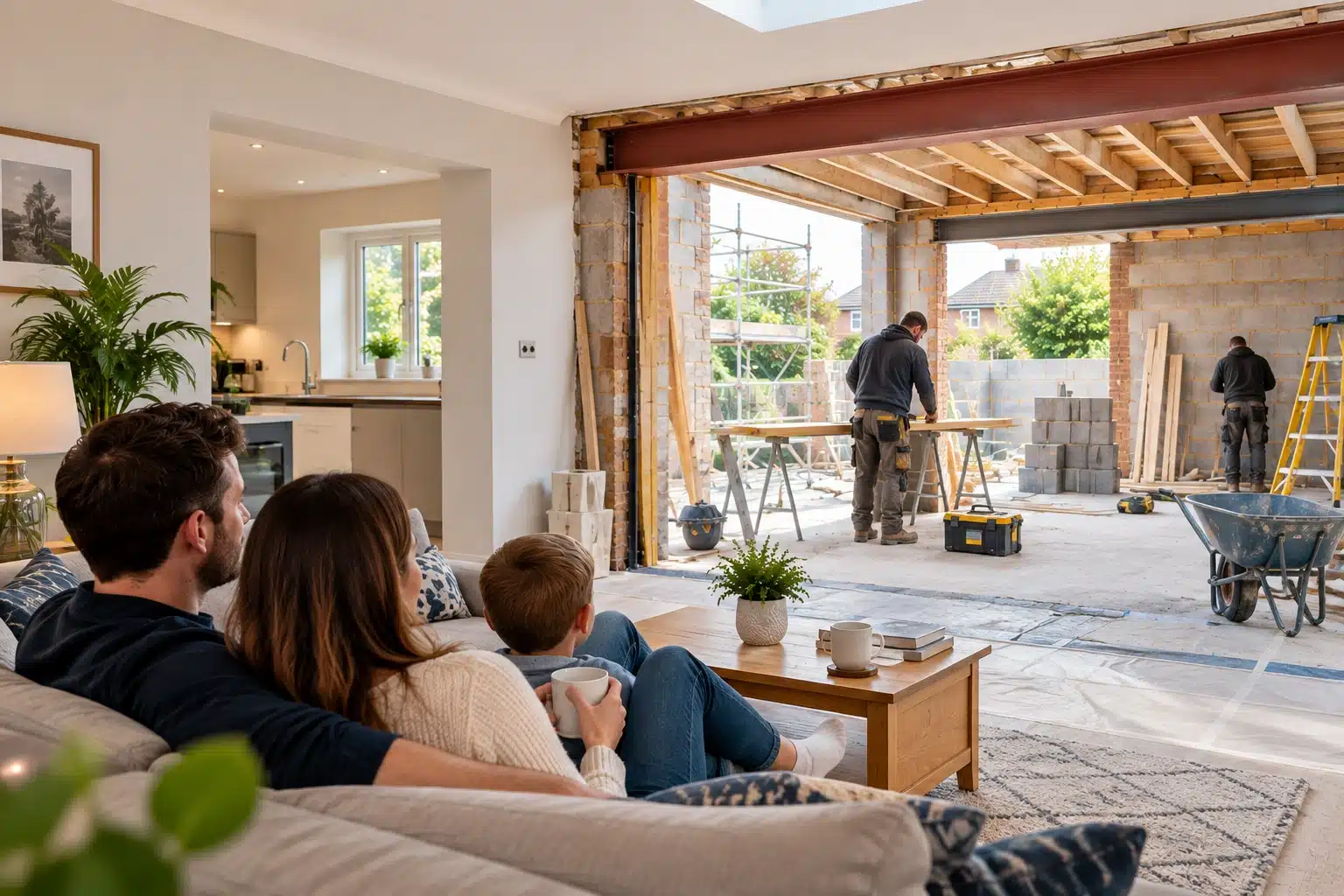
You can often stay at home during an extension if the builder can keep essential areas accessible and separate the construction zone safely.
It is generally easier when:
- The extension is limited to one part of the property.
- You still have access to a usable kitchen and bathroom.
- The builders can create a secure separation between the work area and your living space.
- The heating, water and electricity can remain operational.
- You are comfortable living with construction noise, dust and disruption.
Moving out may be more sensible when the project involves major structural alterations, removes your only kitchen or bathroom, or affects most of the house.
What Determines Whether You Can Stay?
Every extension project is different. The main question is not simply whether you can stay, but whether you can live safely and reasonably comfortably while the work takes place.
The Size of the Extension
A small rear extension may affect only one section of the ground floor. In this situation, you may be able to continue using bedrooms, bathrooms and other living areas.
A larger extension can have a much greater impact because the builders may need to remove walls, install structural steel, reroute services and create new access through the existing house.
Which Rooms Are Being Renovated?
The rooms affected by the project make a major difference.
If the extension is creating a new room while your existing kitchen and bathroom remain available, staying at home may be straightforward.
However, if the project involves removing your kitchen or only bathroom, you will need a temporary arrangement.
How Long Will the Work Take?
A typical single-storey extension may take around 10–16 weeks to construct, although the exact programme depends on the design, size and complexity of the project.
Living through construction for several months can become tiring, particularly when the work affects your everyday routine.
A shorter project may be easier to manage, while a long and complex refurbishment may make temporary accommodation more attractive.
Can You Live at Home During a Kitchen Extension?
Yes, but a kitchen extension can be one of the more difficult projects to live through because the kitchen is often unavailable for part of the construction process.
You may need to create a temporary kitchen in another room.
A basic temporary kitchen could include:
- A microwave for preparing simple meals.
- A kettle for hot drinks and boiling water.
- A small fridge for food storage.
- A portable cooking appliance where it is safe and suitable.
- Temporary access to a sink and running water.
Speak to your builder about when the existing kitchen will be disconnected and how long you are likely to be without normal cooking facilities.
If the kitchen is only unavailable for a short period, staying at home may still be worthwhile.
Can You Stay During a Bathroom Extension?
It depends on how many bathrooms your property has.
If you have more than one bathroom and at least one remains operational, staying at home is generally easier.
If the extension or refurbishment affects your only bathroom, you need to plan an alternative before work begins.
Depending on the project, your builder may be able to programme the work so that essential facilities remain available for as much of the project as possible.
You should never assume that a bathroom will remain usable throughout construction. Ask your contractor for a clear programme showing when water supplies and sanitary facilities will be affected.
What Is It Like Living in a House During an Extension?
Living through an extension is possible, but you should expect some disruption.
Noise
Construction creates noise from activities such as drilling, cutting, demolition and structural work.
The loudest work will normally take place during working hours, but it can still affect your daily routine if you work from home or have young children.
Dust and Dirt
Dust can spread beyond the immediate construction area, particularly when builders need to remove sections of the existing house.
Proper dust control can make a significant difference.
Your contractor should use suitable protection and separation methods, such as:
- Dust screens and temporary barriers.
- Protective coverings over floors.
- Sealed doorways where appropriate.
- Regular removal of construction waste.
- Suitable ventilation and extraction methods.
You should also keep personal belongings away from the construction area wherever possible.
Restricted Access
You may not be able to use certain doors, hallways, rooms or parts of the garden during construction.
Your builder should explain which areas will be restricted and provide a safe route through the property.
Changes to Your Routine
You may need to adjust your normal routine around the construction programme.
For example, you may need to:
- Prepare meals in a temporary kitchen.
- Use alternative entrances.
- Keep children away from certain areas.
- Move furniture into other rooms.
- Work from somewhere other than home.
- Plan around temporary water or electricity interruptions.
Is It Safe to Live in a House During an Extension?
It can be safe to remain in the property if the construction area is properly controlled and separated from the occupied parts of the house.
However, an active building site contains hazards that should not be accessible to household members.
These can include:
- Open excavations.
- Building materials.
- Tools and machinery.
- Temporary electrical supplies.
- Dust and debris.
- Unfinished floors and surfaces.
- Structural openings.
- Construction waste.
Children and pets should never have unrestricted access to the work area.
Talk to your builder about how the site will be secured and how you will safely enter and leave the property each day.
Can You Live in a House During Structural Work?
This depends on the type and extent of structural work.
An extension may require part of an existing external or internal wall to be removed and replaced with structural steel.
During this stage, the property can experience significant disruption, and access between rooms may be restricted.
If major sections of the existing property are being opened up at the same time, it may be more practical to move out temporarily.
Your structural engineer and contractor should determine the appropriate temporary support and construction sequence. You should not occupy an area that the contractor has identified as unsafe.
What About Heating, Water and Electricity?
Before staying at home, ask your builder how the project will affect essential services.
Heating
Your heating system may need to be altered or temporarily disconnected if pipes are being moved or the boiler is affected.
Water
Water supplies may need to be isolated while plumbing work takes place.
Electricity
Electrical circuits may need to be temporarily switched off during certain stages of the work.
Internet
If you work from home, check whether the construction will affect your broadband equipment, cables or normal workspace.
Ask your contractor to give you advance notice of planned service interruptions wherever possible.
Should You Move Out During an Extension?
Moving out is not always necessary, but it can make a major project considerably easier.
Temporary accommodation may be worth considering if:
- Your only kitchen will be unavailable for several weeks.
- Your only bathroom will be out of use.
- The project affects most of the ground floor.
- Major structural alterations are taking place throughout the property.
- You have young children and cannot safely separate them from the construction area.
- You work from home and cannot tolerate regular construction noise.
- The project involves extensive demolition and dust.
- The extension is part of a wider whole-house refurbishment.
For a relatively small extension, however, moving out may add unnecessary accommodation costs.
How to Make Living Through an Extension Easier
If you decide to stay at home, preparation can make the experience much more manageable.
Create a Clean Living Area
Try to keep at least one part of the house completely separate from the construction zone.
This gives you somewhere clean and quiet to relax at the end of the day.
Set Up a Temporary Kitchen
If your kitchen will be unavailable, establish a temporary food preparation area before the existing kitchen is disconnected.
Choose a location with access to electricity and, where possible, water.
Protect Your Belongings
Move valuable, fragile and unnecessary items away from the construction area.
Furniture that cannot be moved should be properly protected from dust and accidental damage.
Keep Children Away From the Work Area
Construction areas are not suitable places for children to play.
Make sure temporary barriers, doors and other site controls remain secure throughout the project.
Make Arrangements for Pets
Dogs, cats and other pets can become stressed by noise, unfamiliar people and changes to the home.
Keep pets away from the construction area and consider whether they need to stay elsewhere during particularly disruptive stages.
Plan Around Your Work
If you work from home, think about where you will work during noisy periods.
You may need to use a separate room, temporary office or alternative workspace.
What Should You Ask Your Builder Before Staying?
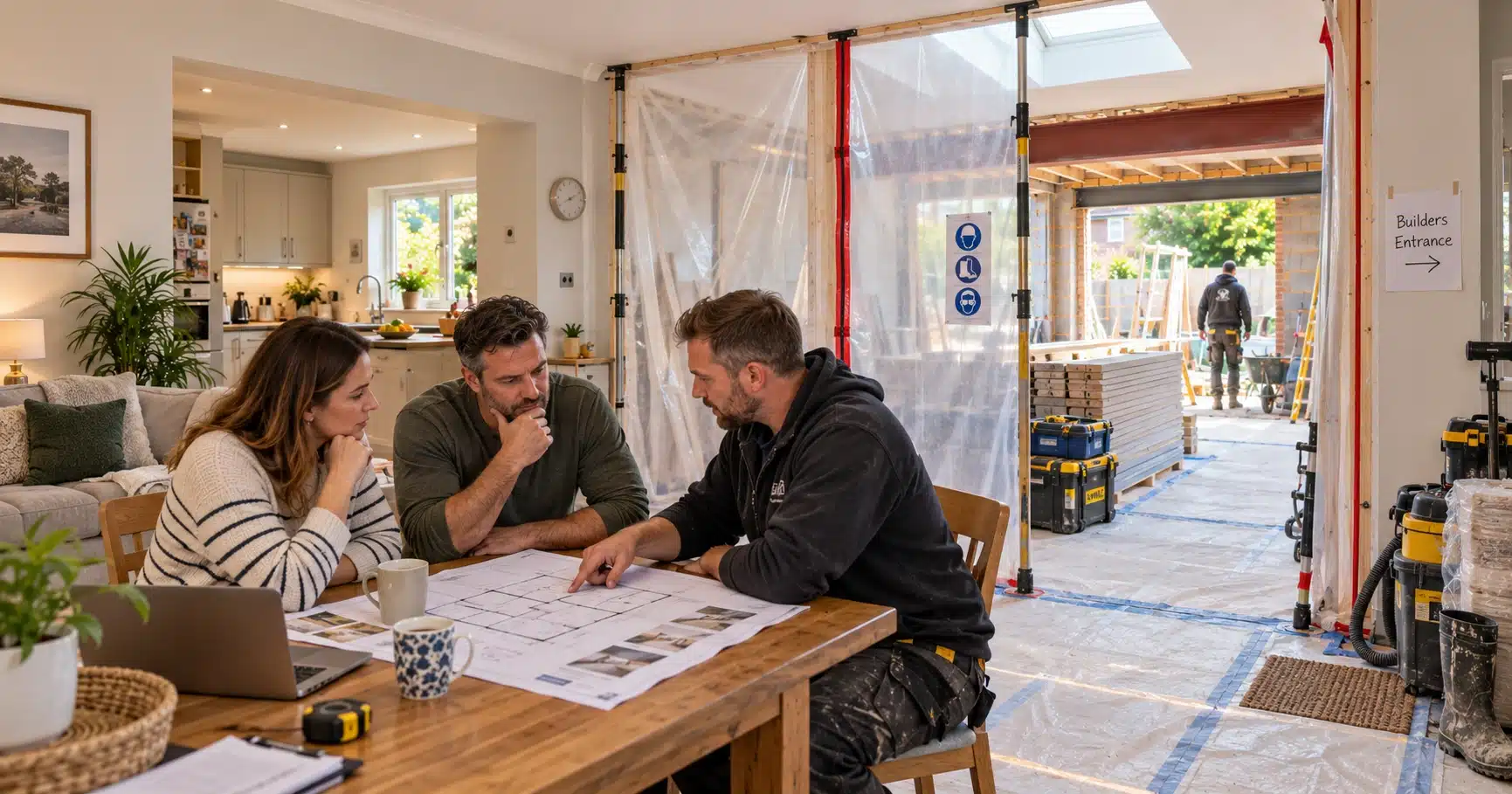
Before construction starts, ask your builder how they intend to manage the project while you remain in the property.
Important questions include:
- Which rooms will remain accessible throughout the project?
- When will the kitchen be unavailable?
- Will the bathroom or toilet be affected?
- When will water or electricity need to be switched off?
- How will the construction area be separated from the rest of the home?
- How will dust be controlled?
- Where will building materials and waste be stored?
- What entrance will the builders use?
- What are the normal working hours?
- Which stages are likely to cause the most disruption?
- How will the site be secured outside working hours?
Getting clear answers before work begins can help you decide whether staying is realistic.
Can You Live in the House During a Two-Storey Extension?
It is possible in some circumstances, but a two-storey extension can be considerably more disruptive than a small single-storey project.
More of the existing property may be affected, and the project can involve substantial structural, roofing and internal work.
If the extension is combined with a wider renovation, staying at home may become impractical.
For a two-storey project, discuss the construction sequence with your builder before deciding whether to remain in the property.
Can You Live in a House During an Extension in London?
Many London homeowners choose to remain in their properties during extensions because moving elsewhere can be expensive and inconvenient.
However, London properties often have restricted access, smaller gardens, neighbouring properties close to boundaries and limited space for storing materials.
These factors can affect how the building work is organised.
For terraced and semi-detached properties, the builder may also need to consider Party Wall requirements, shared structures and access arrangements with neighbouring properties.
Good planning is particularly important where the construction site has limited space.
How Much Does It Cost to Live Elsewhere During an Extension?
If you move out, remember to include temporary accommodation in your overall project budget.
Potential costs include:
- Short-term accommodation can add a significant expense over several weeks or months.
- Storage may be necessary if much of your furniture needs to be removed.
- Travel costs can increase if your temporary home is further from work or school.
- Moving belongings more than once can add additional time and expense.
- You may need to pay for utilities or other costs at your temporary accommodation.
Compare these costs with the practical difficulties of staying at home before making your decision.
Staying at Home vs Moving Out
| Staying at Home | Moving Out |
| You avoid temporary accommodation costs. | You can escape most construction noise and dust. |
| You can keep an eye on the property and project. | You do not need to work around builders each day. |
| You can continue using unaffected rooms. | Children and pets can remain away from the construction site. |
| You may need to tolerate noise, dust and restricted access. | You will have additional accommodation and moving costs. |
| You may need temporary kitchen or bathroom arrangements. | You can maintain a more normal daily routine. |
The best option depends on your property, the project and your household.
What Are the Advantages of Staying at Home?
There are several potential benefits to remaining in the property.
- You can avoid paying for temporary accommodation during the construction period.
- You can continue using parts of the house that are not affected by the work.
- You can maintain your normal local routine for work, school and other commitments.
- You can communicate with the builders more easily when questions arise.
- You do not have to move your belongings out of the property unnecessarily.
What Are the Disadvantages?
There are also drawbacks that you should consider.
- Construction noise can make working and relaxing more difficult.
- Dust and dirt can spread into areas that are not being renovated.
- You may lose access to your kitchen, bathroom or other essential facilities.
- Builders may need to enter parts of your home regularly.
- Your normal routine may be disrupted for several weeks.
- Living around construction materials and temporary barriers can become stressful.
When Is It Better to Move Out?
There is no universal rule, but moving out is usually worth considering when the project makes the property difficult to use safely or comfortably.
A temporary move may be sensible when the extension involves major structural work, extensive demolition, loss of essential facilities or significant disruption across several parts of the house.
If only one room or a small section of the property is affected, staying at home may be much easier.
Final Words: Can You Live in a House During an Extension?
Yes, you can often live in a house during an extension, but you need to assess the practical and safety implications before construction begins.
A small, well-contained extension may be relatively easy to live through if your kitchen, bathroom, heating and main living areas remain available. Larger projects can be much more disruptive, particularly when they involve major structural alterations or remove essential facilities.
The key is to discuss the construction sequence with your builder in advance. Establish which areas will remain usable, how the site will be separated, when services will be affected and how long the most disruptive stages are expected to last.
With careful planning, many homeowners can remain in their property throughout an extension while keeping disruption to a manageable level.