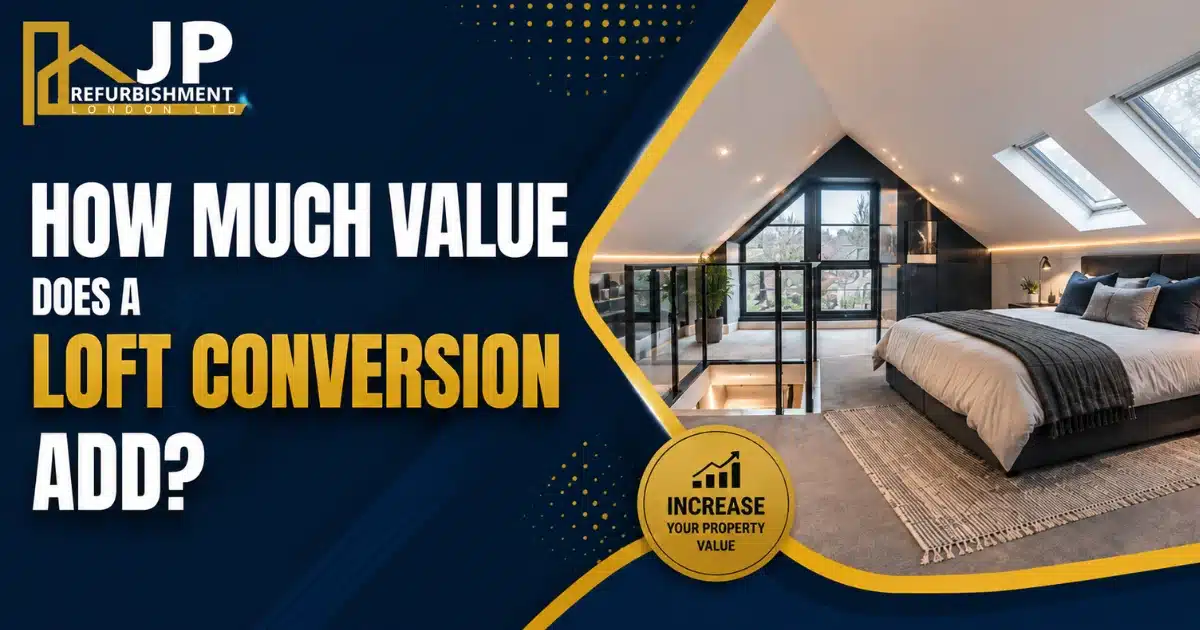
A loft conversion can add around 15% to 25% to the value of a UK property, although the actual increase depends on the location, size and quality of the conversion, the type of property, and the amount of usable space created. In some London and South East properties, a well-planned loft conversion can add significant value because additional bedrooms and bathrooms are highly desirable.
However, a loft conversion should not be viewed only as a way to increase your property’s sale price. It can also provide valuable additional living space without the cost and disruption of moving home.
Quick Answer: How Much Value Can a Loft Conversion Add?
A well-designed loft conversion can typically increase a property’s value by 15% to 25%. For a property worth £400,000, for example, a 15% increase would represent around £60,000, while a 25% increase would represent around £100,000.
The actual increase can be higher or lower depending on factors such as:
- The current value and location of your property can have a major effect on the potential increase in value.
- Creating an additional bedroom can make a larger difference than simply creating an open-plan living or storage area.
- Adding an en-suite bathroom can make the new bedroom considerably more attractive to future buyers.
- The type and quality of the loft conversion will influence how much usable space you create.
- The design should complement the existing property rather than looking like an unrelated addition.
- The local ceiling price can limit how much your property is ultimately worth.
It is important to remember that a 15% to 25% increase is an indicative range, not a guaranteed return. Property values vary considerably between areas and individual homes.
Why Does a Loft Conversion Add Value?
The main reason a loft conversion can increase property value is simple: it creates additional usable accommodation without requiring you to move to a larger property.
For many homeowners, converting an unused loft can provide:
- An additional bedroom for a growing family.
- A master bedroom with a private en-suite.
- A dedicated home office away from the main living areas.
- A guest bedroom that can also be used as flexible accommodation.
- A children’s bedroom or playroom.
- Additional living space without extending into the garden.
The value comes from making previously unused roof space into practical, comfortable accommodation.
Does Adding a Bedroom Increase Property Value More?
In many cases, yes. A loft conversion that creates a genuine additional bedroom can be more valuable than one that simply provides an open-plan room.
For example, changing a two-bedroom property into a well-designed three-bedroom home can potentially make a significant difference because the property moves into a different category for buyers.
However, the additional bedroom needs to be practical. It should have suitable proportions, natural light, ventilation and appropriate access. If the room feels cramped or difficult to use, the conversion may not provide the expected increase in value.
This is why the design should focus on usable living space rather than simply maximising floor area.
Does an En-Suite Loft Conversion Add More Value?
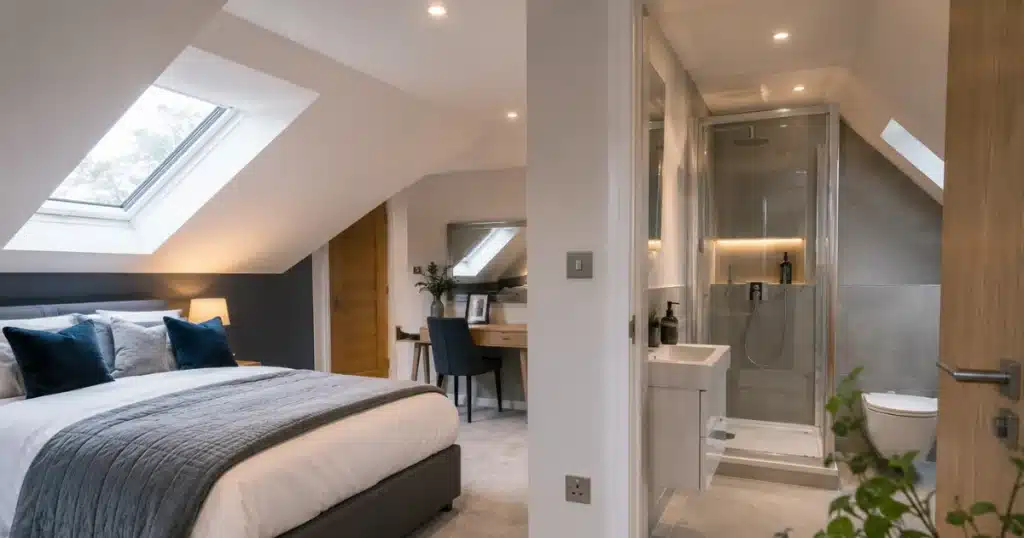
Adding an en-suite bathroom can make a loft bedroom more appealing, particularly when the conversion creates a master bedroom.
An en-suite can provide:
- Greater privacy for the main bedroom.
- More convenience for homeowners and guests.
- A stronger sense of a complete bedroom suite.
- Additional functionality for larger families.
- A more attractive proposition for potential buyers.
However, an en-suite also increases the cost of the project. The additional value it creates should therefore be considered alongside the cost of plumbing, drainage, fixtures, ventilation, waterproofing and installation.
A good loft conversion designer will consider whether the available space can accommodate an en-suite comfortably rather than forcing too many facilities into a small room.
Which Type of Loft Conversion Adds the Most Value?
There is no single loft conversion type that will always provide the highest return because the best option depends on your property.
Velux Loft Conversion
A Velux conversion usually involves installing roof windows while keeping the existing roof structure largely unchanged.
It is generally one of the simpler and more cost-effective options. However, because it creates less additional volume than some structural conversions, the potential increase in property value may also be more limited.
A Velux conversion can work particularly well where the existing loft already has sufficient head height and floor space.
Dormer Loft Conversion
A dormer conversion extends vertically from the existing roof slope to create additional headroom and usable floor area.
It is one of the most popular options because it can significantly improve the practicality of the loft.
A well-designed dormer can create enough space for:
- A comfortable bedroom.
- A master bedroom with an en-suite.
- A home office.
- Additional built-in storage.
The greater amount of usable accommodation can make a dormer conversion particularly attractive to homeowners looking to increase both space and property value.
Hip-to-Gable Loft Conversion
A hip-to-gable conversion replaces the sloping side of a hipped roof with a vertical wall, creating additional internal volume.
It is commonly suitable for semi-detached and detached properties with a hipped roof.
When combined with a dormer, it can create a much larger and more practical loft area.
Mansard Loft Conversion
A mansard conversion substantially changes the roof structure to maximise usable internal space.
Because it can create a large amount of additional accommodation, it can be particularly valuable where planning and property constraints allow it.
However, it is also generally more complex and expensive than a basic rooflight conversion, so the potential increase in property value needs to be assessed against the overall project cost.
How Much Does a Loft Conversion Cost?
A typical loft conversion in the UK can cost around £35,000 to £75,000 or more, depending on the size, design, structural work, specification and location.
London and parts of the South East can have higher construction and labour costs.
Your final cost may depend on:
- The type of loft conversion you choose.
- The size and complexity of the project.
- Whether structural alterations are required.
- The condition of the existing roof.
- The number and type of windows required.
- Whether you add a bathroom or en-suite.
- The level of insulation required.
- Electrical and plumbing requirements.
- Internal finishes and fitted storage.
- Professional fees and approvals.
- Access and site conditions.
The cheapest conversion is not necessarily the one that provides the best financial return. A poorly designed conversion can reduce the amount of usable space and make the property less appealing.
Does a Loft Conversion Always Pay for Itself?
No. A loft conversion does not automatically add more value than it costs.
For example, spending £70,000 on a conversion does not guarantee that your property will increase in value by £70,000 or more.
The financial return depends heavily on the relationship between:
Conversion cost + existing property value + local property ceiling + buyer demand
This is why it is important to research local property prices before starting the project.
If similar properties in your area with an additional bedroom sell for significantly more, there may be a stronger financial case for the conversion.
What Is the Property Ceiling Price?
The property ceiling price is the approximate maximum value that buyers are willing to pay for a property of that type in a particular area.
This is an important consideration before investing in a loft conversion.
For example, if comparable properties in your immediate area rarely sell for more than £600,000, spending heavily on a conversion does not necessarily mean your home will become worth £700,000.
Before starting work, compare your property with similar homes nearby that already have:
- The same number of bedrooms.
- A similar overall floor area.
- Similar quality of finishes.
- Comparable bathrooms and kitchens.
- Similar outdoor space.
- A similar location and condition.
This gives you a much better indication of the potential value of your finished property.
Location Makes a Major Difference
The financial benefit of a loft conversion varies considerably across the UK.
In areas where larger homes are in high demand and available properties are expensive, additional accommodation can command a significant premium.
This is particularly relevant in parts of London and the South East, where homeowners may choose to extend upwards because moving to a larger property can be considerably more expensive.
In other areas, the increase in value may be smaller.
For this reason, national percentages should only be used as a general guide. Local property prices and buyer demand are more important when estimating the likely return for your particular home.
What Features Can Increase the Value of a Loft Conversion?
The design and specification of the conversion can have a major influence on how buyers perceive the additional space.
Create a Proper Bedroom
If possible, designing the loft as a genuine bedroom can make the additional accommodation more useful and marketable.
The room should have enough space for appropriate furniture and should not feel like an oversized storage area.
Add an En-Suite Where Practical
An en-suite can make a loft bedroom feel more like a complete master suite and can increase its appeal to potential buyers.
Maximise Natural Light
Roof windows and dormer windows can make the loft feel brighter, larger and more comfortable.
Natural light is particularly important in loft spaces because the roof structure can otherwise make the room feel enclosed.
Use Built-In Storage
Sloping ceilings can make conventional furniture difficult to position.
Built-in wardrobes, eaves storage and fitted cupboards can turn awkward areas into useful storage while keeping the main floor area uncluttered.
Prioritise Insulation
A loft conversion should be comfortable throughout the year.
Good insulation can improve thermal performance and help prevent the room from becoming excessively cold in winter or hot in summer.
Choose Durable Finishes
A high-quality finish can make the conversion feel like a natural part of the property.
Flooring, doors, lighting, sanitaryware, fitted storage and other finishes should be selected according to how the room will actually be used.
Does the Quality of the Conversion Affect Property Value?
Yes. Two loft conversions with the same floor area can have very different effects on property value.
A well-designed conversion should feel like a natural extension of the existing home.
Poor workmanship, awkward layouts, insufficient storage, inadequate lighting or low-quality finishes can reduce its appeal.
Potential buyers will also consider whether the work appears professionally completed and whether the necessary approvals and certification are available.
Can a Loft Conversion Increase Value Without Planning Permission?
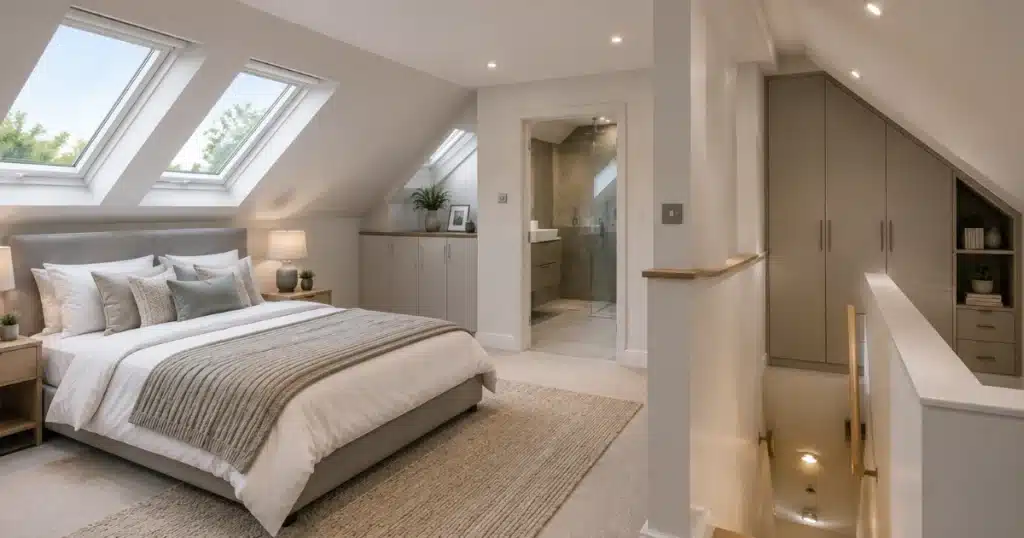
Some loft conversions may fall under permitted development rights, meaning a full planning application may not be required.
However, permitted development has specific limitations and conditions. Whether your project qualifies depends on factors including the property, proposed design and location.
Building regulations requirements are separate from planning permission, so complying with permitted development does not mean you can ignore building regulations.
For properties such as flats, listed buildings or homes in certain designated areas, different planning considerations may apply.
It is important to check the requirements for your specific property before starting work.
How to Maximise the Return on Your Loft Conversion
If increasing property value is one of your main objectives, focus on the features that genuinely improve the home’s usability.
Consider the following before committing to the design:
- Research the selling prices of comparable properties in your local area.
- Establish whether an additional bedroom would significantly improve your property’s market position.
- Choose the loft conversion type that provides the best balance between space and cost.
- Avoid creating too many small rooms that make the loft feel cramped.
- Include sufficient storage so the new space remains practical.
- Use natural light carefully to make the room feel bright and spacious.
- Consider an en-suite if the available space and budget make it worthwhile.
- Use materials and finishes that are durable and consistent with the quality of the rest of the property.
- Keep a realistic contingency budget for unexpected structural or construction costs.
- Make sure the completed work meets the relevant planning and building requirements.
Is a Loft Conversion a Good Investment?
A loft conversion can be a strong investment when the design suits the property and local market.
The greatest benefit often comes from combining additional living space with better functionality. Instead of simply adding square metres, a successful conversion can change how a family uses the entire property.
For example, a previously unused loft could become a bright master bedroom with an en-suite and built-in storage. This provides an immediate lifestyle benefit while potentially making the property more attractive when you eventually sell.
The strongest projects are therefore not necessarily the largest ones. They are the ones that create useful, well-designed accommodation that buyers actually want.
Final Words
A loft conversion can add approximately 15% to 25% to a property’s value, but there is no guaranteed percentage that applies to every UK home.
The potential return depends on your property’s location, current value, available loft space, conversion type, design quality and the demand for additional bedrooms and bathrooms in your area.
Before starting the project, look beyond the headline percentage. Compare local property prices, understand your potential costs and design the conversion around the type of accommodation that will provide the greatest practical and financial benefit.
For homeowners in London, where moving to a larger property can be particularly expensive, making better use of existing loft space can be an attractive alternative to moving.
If you are considering a loft conversion, professional advice at the design stage can help you understand what is realistically achievable and how to make the most of your available space.