

Starting a house renovation takes a complete plan and experience team. If your property needs several improvements or you are unsure which work should be completed first. The best starting point is to assess the property’s condition, identify the improvements you need and establish a realistic budget before arranging any construction work.
In this guide, we explain where to start with a house renovation, what to consider at each stage and how to prepare your property for a successful project.
Where Should You Start When Renovating a House?
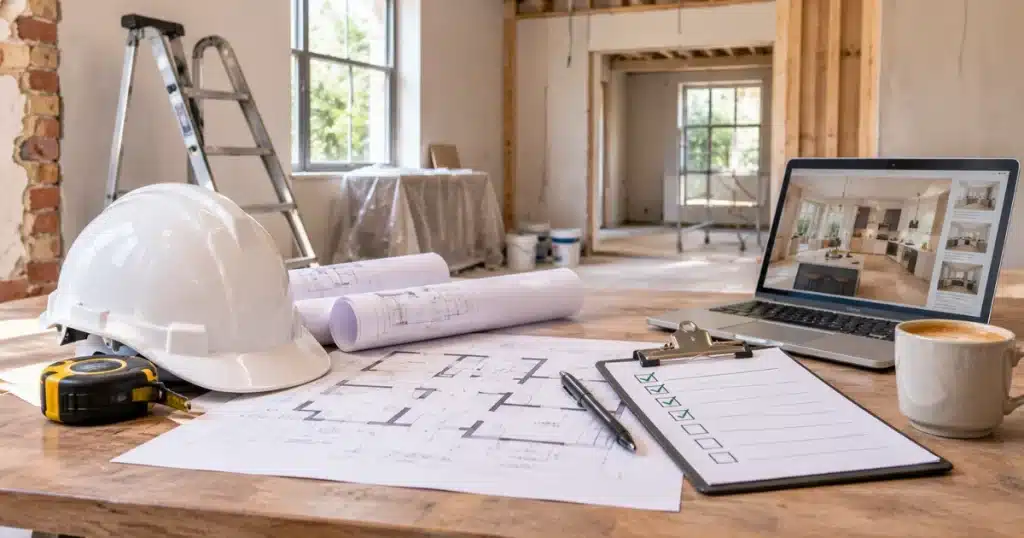
The best way to start a house renovation is to assess your property’s condition, identify the improvements needed and create a realistic plan before beginning construction.
Follow these essential steps:
- Inspect Your Property: Check the roof, walls, floors, structure, plumbing, electrics and heating system.
- Identify Renovation Priorities: Separate essential repairs from functional improvements and cosmetic upgrades.
- Set Your Renovation Budget: Estimate labour, materials, professional fees, approvals and unexpected expenses.
- Decide Between Partial and Full Renovation: Establish whether you need to improve individual rooms or refurbish the entire property.
- Get Professional Advice: Consult suitable architects, surveyors, structural engineers or refurbishment specialists where necessary.
- Check Permissions and Regulations: Establish whether planning permission, Building Regulations approval, listed building consent or Party Wall procedures apply.
- Prepare a Renovation Schedule: Organise the work in the correct order, from structural repairs to final decoration.
- Choose a Suitable Contractor: Compare detailed quotations, experience, references, insurance and the proposed scope of work.
- Prepare Your Home: Plan access, furniture protection, utilities, storage and whether you can safely remain in the property.
- Monitor the Work and Complete Handover: Check progress, arrange relevant inspections and collect certificates and documentation.
Starting with a property assessment and a clear renovation plan helps you avoid unnecessary costs, reduce disruption and make better decisions throughout the project.
Assess the Current Condition of Your House
Before deciding what to renovate, understand the condition of your property. A house may look outdated on the surface but have underlying problems that need attention before cosmetic improvements begin.
Start by inspecting the main areas of the building and identifying anything that could affect its safety, condition or future renovation work.
What should you check first?
- Roof and gutters: Look for damaged roof coverings, leaking gutters, missing tiles and signs of water entering the property.
- Walls and ceilings: Check for cracks, damp patches, peeling finishes, water damage and signs of movement.
- Foundations and structural elements: Pay attention to significant cracks, uneven floors, sagging ceilings and other possible signs of structural problems.
- Electrical installations: Consider whether the wiring, consumer unit, sockets and lighting require inspection or upgrading.
- Plumbing and drainage: Check for leaks, poor water pressure, damaged pipes and drainage problems.
- Heating and ventilation: Assess the condition of the heating system, insulation, windows and ventilation arrangements.
If you discover significant defects, arrange an appropriate survey or specialist inspection before deciding on the renovation scope. A general visual inspection cannot establish the full condition of concealed structures or building services.
Why does this matter?
If you decorate walls before addressing damp, replace flooring before investigating a leak or install a new kitchen before checking the plumbing, you may have to undo completed work.
Identifying problems early helps you establish the correct order of renovation and allocate your budget more effectively.
Decide What Needs Renovating
Once you understand the property’s condition, decide which areas need improvement and what you want to achieve.
Not every house requires a complete renovation. Some properties need essential repairs and a few modern upgrades, while others may benefit from a more extensive refurbishment involving several rooms and building services.
Divide your requirements into three main categories.
Essential repairs
These address problems that could affect the property’s condition, safety or performance.
Examples include:
- Repairing roof leaks and water damage.
- Addressing damp and its underlying causes.
- Resolving structural defects.
- Repairing faulty plumbing or electrical installations.
- Improving inadequate ventilation.
Functional improvements
These make the property more practical and comfortable for everyday use.
Examples include:
- Replacing an outdated kitchen.
- Renovating bathrooms.
- Improving storage and room layouts.
- Updating heating and insulation.
- Creating a more connected living and dining area.
Cosmetic improvements
These focus mainly on appearance and interior finishes.
Examples include:
- Painting walls and ceilings.
- Replacing worn flooring.
- Updating internal doors and handles.
- Installing new lighting and decorative features.
- Modernising interior finishes.
Prioritise essential repairs first, then consider functional improvements and decorative upgrades. This prevents money being spent on finishes before important building issues have been resolved.
Establish Your House Renovation Budget
Setting a realistic budget is one of the most important steps when planning a house renovation. Your total expenditure will depend on the property’s size, existing condition, materials, labour and the amount of construction work required.
A cosmetic update will have different financial requirements from a full house refurbishment involving new kitchens, bathrooms, electrical installations, plumbing and structural alterations.
What should your renovation budget include?
| Cost category | What to allow for |
| Surveys and professional fees | Property inspections, design work and specialist advice where required. |
| Preparation and strip-out | Removing old fixtures, fittings, flooring and unwanted materials. |
| Structural work | Wall alterations, supporting structures and necessary repairs. |
| Electrical and plumbing | Rewiring, lighting, pipework, heating and service alterations. |
| Kitchen and bathroom | Units, worktops, sanitaryware, fittings and installation. |
| Interior finishes | Plastering, flooring, painting, tiling and joinery. |
| Additional costs | Waste removal, temporary arrangements and unforeseen repairs. |
Do not base your budget solely on the contractor’s headline quotation. Check whether materials, fixtures, waste removal, professional fees and VAT are included or excluded.
It is also sensible to keep a contingency reserve for unexpected work. Older properties can contain hidden defects that only become apparent after floors, ceilings or walls are opened up.
How can you avoid exceeding your budget?
- Obtain detailed quotations based on the same scope of work.
- Decide on materials and finishes before construction begins.
- Prioritise essential work over optional upgrades.
- Allow for possible additional repairs.
- Agree how changes and additional work will be priced.
- Monitor expenditure throughout the project.
A realistic budget should reflect the property you actually have, not just the improvements you initially want to make.
Decide Between a Partial Renovation and a Full House Refurbishment
Before appointing a contractor, establish how much of the property needs work. This decision will influence the design, budget, construction schedule and number of trades involved.
A partial renovation focuses on selected areas or specific problems. For example, you might renovate the kitchen, update one bathroom, replace flooring or redecorate the main living areas.
A full house refurbishment involves improvements across several parts of the property. Depending on the condition and requirements, it may include strip-out, structural repairs, electrical and plumbing upgrades, kitchen and bathroom installations, plastering, flooring and decorating.
Which option is better?
Choose a partial renovation if the rest of your property is in good condition and you only need to improve particular rooms.
A full refurbishment may be more suitable if several areas require attention, essential building services need updating or you want to coordinate improvements throughout the property.
Also consider whether completing several improvements together would avoid repeating preparation, installation or finishing work at different stages.
Get Professional Advice Before Starting Construction
Not every renovation requires an architect, but some projects need professional input to establish what is possible and how the work should be carried out.
The professionals you need will depend on the property’s condition and the proposed alterations.
Who might you need?
- Architect: Can help develop designs, improve layouts and prepare drawings for more complex projects.
- Building surveyor: Can inspect the property’s condition and advise on defects or areas requiring further investigation.
- Structural engineer: Can assess structural alterations, load-bearing walls, beams and other structural requirements.
- Architectural designer or technician: May prepare design and technical drawings for suitable renovation projects.
- Specialist tradespeople: Electricians, plumbers, heating engineers and other qualified professionals can assess and complete specific installations.
- Refurbishment contractor: Can coordinate and deliver the agreed renovation work, depending on the services included in their contract.
For example, if you want to remove a wall between your kitchen and dining room, you may need a structural engineer to assess whether it is load-bearing and specify suitable support.
If you are renovating an older property, a survey may also identify defects that need to be addressed before the design is finalised.
Getting suitable advice at this stage can prevent unsuitable design decisions and expensive changes once work has started.
Check Planning Permission and Building Regulations
Before beginning renovation work, establish whether any permissions, approvals or legal requirements apply to your proposed changes.
Many internal cosmetic improvements do not require planning permission. However, structural alterations, extensions and certain external changes may have additional requirements.
It is important to understand the difference between planning permission and Building Regulations.
Planning permission
Planning permission controls development and certain changes to properties. Some house extensions and external alterations in England may qualify as permitted development, provided they meet the relevant conditions and limitations.
You may need planning permission for work that falls outside those rights. Additional restrictions can apply to listed buildings, conservation areas and properties subject to other planning controls.
Building Regulations
Building Regulations deal with the technical standards that building work must meet. They can apply even when planning permission is not required.
Depending on the project, requirements may cover:
- Structural safety and stability.
- Fire safety and escape arrangements.
- Electrical safety.
- Energy efficiency and insulation.
- Ventilation.
- Drainage and sanitation.
- Access and other relevant building standards.
Other requirements to consider
If your renovation involves work near or on a shared boundary, the Party Wall etc. Act 1996 may apply. Listed buildings may require listed building consent for certain alterations. Asbestos should also be considered before disturbing materials in older properties.
Check the requirements with your local planning authority and building control service before construction begins. Do not assume that all refurbishment work is exempt from approval.
Create a Detailed Renovation Plan and Schedule
Once you have established the work, budget and professional requirements, prepare a construction plan.
A house renovation usually involves several trades working in a particular order. Poor coordination can cause delays, repeated work and unnecessary costs.
What is the correct order for renovating a house?
A typical renovation programme may follow this sequence:
- Surveys and preparation: Assess the property, finalise the scope, complete necessary design work and arrange relevant approvals.
- Site preparation and strip-out: Protect areas that will remain, remove agreed fixtures and fittings and prepare the property for construction.
- Structural repairs and alterations: Complete necessary structural work, wall alterations and other major building repairs.
- Roof, windows and external work: Address relevant external repairs and improvements where included in the project.
- First-fix plumbing and electrics: Install or alter pipework, wiring and other services before walls and floors are closed up.
- Insulation and plastering: Complete specified insulation, boarding, plastering and surface preparation.
- Kitchen and bathroom installation: Install units, sanitaryware, fittings and associated finishes at the appropriate stage.
- Second-fix installations: Complete sockets, switches, lighting, taps, radiators and other final connections.
- Flooring and decoration: Install specified floor finishes, paint walls and ceilings and complete interior details.
- Final inspections and handover: Test relevant installations, complete outstanding items, remove waste and check the finished work.
The exact order can vary. For example, kitchen installation, flooring and decorating need to be coordinated according to the materials and installation methods specified.
Why is scheduling important?
Some tasks cannot start until earlier work has been completed and inspected. If the electrician, plumber, plasterer and kitchen installer are not properly coordinated, one trade may have to return to redo or complete work.
A realistic programme should also account for material delivery, specialist availability, approval processes and potential delays.
Choose a Reliable House Renovation Contractor
Choosing the right contractor is an important decision because the quality of workmanship, project coordination and communication can all influence the final result.
Do not select a contractor based solely on the lowest quotation. A cheaper price may reflect a narrower scope, different materials or work that has not been included.
What should you check before appointing a contractor?
- Relevant experience: Look for experience with properties and renovation projects similar to yours.
- Previous projects: Ask to see genuine completed work and, where possible, speak to previous customers.
- Detailed quotation: Make sure the quote explains the work, materials, labour, exclusions and additional costs.
- Insurance: Check that appropriate insurance is in place for the proposed work.
- Project responsibilities: Establish who will arrange trades, obtain necessary approvals and coordinate the construction.
- Communication: Choose a contractor who explains the process, responds to questions and keeps you informed.
- Written agreement: Agree on the scope, payment arrangements, programme, responsibilities and how variations will be handled.
Before work starts, make sure you understand exactly what the contractor is responsible for and which items you need to arrange separately.
Prepare Your Home Before Renovation Work Begins
Construction can affect everyday life, particularly when several rooms or essential services are being renovated.
Preparing your home in advance can make the process easier for both your household and the people carrying out the work.
What should you arrange?
- Remove furniture, personal belongings and valuables from working areas.
- Protect rooms, surfaces and possessions that are not being renovated.
- Agree on site access, working hours and areas available to contractors.
- Discuss temporary arrangements for water, electricity and heating interruptions.
- Arrange suitable waste storage and removal.
- Keep children and pets away from active construction areas.
- Consider temporary accommodation if essential facilities or large parts of the property will be unavailable.
Can you live in your house during renovation?
It depends on the scale and location of the work. You may be able to remain in your home during a smaller renovation if essential facilities remain accessible and the working areas can be safely separated.
However, a full refurbishment involving kitchen replacement, bathroom renovations, extensive electrical work or structural alterations can make everyday living difficult.
Consider the construction programme, dust, noise, access and availability of essential facilities before deciding whether to stay or move temporarily.
Inspect the Work and Complete the Handover
The renovation process does not finish when the main construction work is completed. The final stage is to inspect the property, check the agreed work and make sure outstanding items are addressed.
Walk through each renovated area and compare the finished work with the agreed specification.
Your final renovation checks should include:
- Walls, ceilings and painted surfaces are finished as agreed.
- Flooring, tiles, doors and skirting boards have been installed correctly.
- Kitchen cabinets, drawers, appliances and worktops have been checked.
- Bathroom fittings, taps, showers and drainage are functioning properly.
- Relevant electrical and plumbing installations have been tested.
- Heating and ventilation systems are operating as intended.
- Waste and unused materials have been removed.
- Outstanding defects or incomplete items have been recorded and agreed for completion.
Request relevant certificates, warranties, manuals and Building Regulations completion documentation where applicable.
A proper handover gives you a record of the completed work and helps you understand how to maintain any new installations.
Common Mistakes to Avoid When Starting a House Renovation
Even a well-intentioned renovation can become more complicated if important decisions are overlooked during the planning stage.
Some common mistakes include:
- Starting without assessing the property: Hidden defects can lead to additional work and disrupt the renovation schedule.
- Setting an unrealistic budget: Underestimating labour, materials and professional fees can leave insufficient funds for essential work.
- Choosing finishes too early: Spending money on decorative improvements before resolving structural or building-service issues can result in rework.
- Ignoring approvals: Starting work without checking applicable permissions or Building Regulations can cause compliance problems.
- Hiring a contractor without comparing the scope: Different quotations may include different materials, labour and responsibilities.
- Making frequent changes during construction: Late decisions can increase costs, affect material orders and delay other trades.
- Failing to plan the work sequence: Poor coordination can result in repeated installations and unnecessary disruption.
The best way to avoid these problems is to establish a clear scope, investigate the property, agree on a realistic budget and organise the construction process before work begins.
Frequently Asked Questions
Can I renovate my house without an architect?
Yes. You do not generally need to appoint an architect for ordinary house renovation work. However, complex layout changes, extensions and structural alterations may require design drawings, structural calculations or other professional input.
The right professional depends on the nature of the work and the information required for your project.
Should I renovate the kitchen or bathroom first?
There is no fixed rule. Start with any essential repairs or building-service problems that affect these rooms. If both need renovation, consider how plumbing, electrical work, installation schedules and household requirements can be coordinated.
How do I know whether my house needs a full renovation?
A full renovation may be appropriate when several rooms need updating, essential services are outdated or the property requires improvements throughout. If the rest of the home is in good condition, a partial renovation may be more practical.
Is it better to renovate an old house or buy a new one?
This depends on the property’s condition, purchase price, renovation requirements and your long-term plans. An older house may have potential for improvement, but structural defects, outdated services and hidden problems need to be considered before committing to the project.
Do I need to move out during a house renovation?
Not always. Smaller projects can often be completed while homeowners remain in the property. However, extensive refurbishment may make the home difficult or unsafe to occupy temporarily, particularly when essential facilities are being replaced.