
A house extension in the UK can typically cost between £30,000 and £100,000+, depending on the size, type of extension, specification, location and structural work involved. A simple single-storey extension will usually cost less than a double-storey or more complex extension.
For homeowners in London, costs can be higher because of labour rates, restricted access, property types and the complexity of working on existing buildings.
House Extension Cost in UK
As a general guide, you could expect to budget approximately:
- Small single-storey extension: £30,000–£50,000.
- Medium single-storey extension: £50,000–£80,000.
- Large or high-specification extension: £80,000–£120,000+.
- Double-storey extension: £70,000–£150,000+.
These figures are broad estimates rather than fixed prices. The actual cost of your extension will depend on your property’s condition, the design, materials, structural requirements and the amount of internal work needed.
What Determines the Cost of a House Extension?
Several factors can have a major effect on the final price.
1. Size of the Extension
The larger the extension, the more you will generally spend on foundations, walls, roofing, windows, flooring, electrics, plumbing and labour.
However, the cost does not increase simply because you are adding more floor area. The design and specification also make a significant difference.
2. Type of Extension
Different extension designs have different construction requirements.
A straightforward rear extension may be relatively simple, while a wraparound extension or double-storey extension requires more structural and finishing work.
3. Your Location
Building costs vary across the UK.
London and parts of the South East can have higher labour and material costs than other regions. Access, parking restrictions, skips, deliveries and working space can also affect the price of a London extension.
4. The Condition of Your Existing Property
Your existing house needs to be suitable for the proposed extension.
Older properties may require additional structural repairs, drainage work, electrical upgrades or other improvements before construction can progress.
Unexpected problems discovered during construction can also increase the budget.
5. The Quality of Materials
Your choice of materials can make a substantial difference.
Windows, doors, roof systems, flooring, kitchen units, sanitaryware, tiles and worktops are all available at different price points.
A high-specification extension will naturally cost more than a basic build with standard finishes.
How Much Does a Single-Storey Extension Cost?
A single-storey extension can cost around £30,000 to £100,000+, depending on its size and specification.
A small rear or side extension with a straightforward design may sit towards the lower end of the range.
A larger extension with premium glazing, a new kitchen, structural alterations and high-quality finishes can move towards or beyond the upper end.
Single-storey extensions are particularly popular for creating:
- Larger kitchens and dining areas.
- Open-plan family rooms.
- Utility rooms.
- Home offices.
- Additional living space.
- Kitchen-diners with garden access.
How Much Does a Double-Storey Extension Cost?
A double-storey extension generally costs more than a single-storey extension, but it can provide considerably more floor space for the money because you are extending upwards as well as outwards.
A typical double-storey project could cost approximately £70,000 to £150,000+, depending on the size, specification and structural requirements.
It can be a practical option when you need both additional ground-floor living space and another bedroom or bathroom upstairs.
How Much Does a Rear Extension Cost?
A rear extension is one of the most common ways to increase living space.
A relatively simple rear extension may cost around £30,000 to £70,000, while larger or higher-specification projects can cost considerably more.
The final price will depend on factors such as the size of the extension, foundations, roof design, glazing and whether you are creating a new kitchen or changing the existing layout.
How Much Does a Side Return Extension Cost?

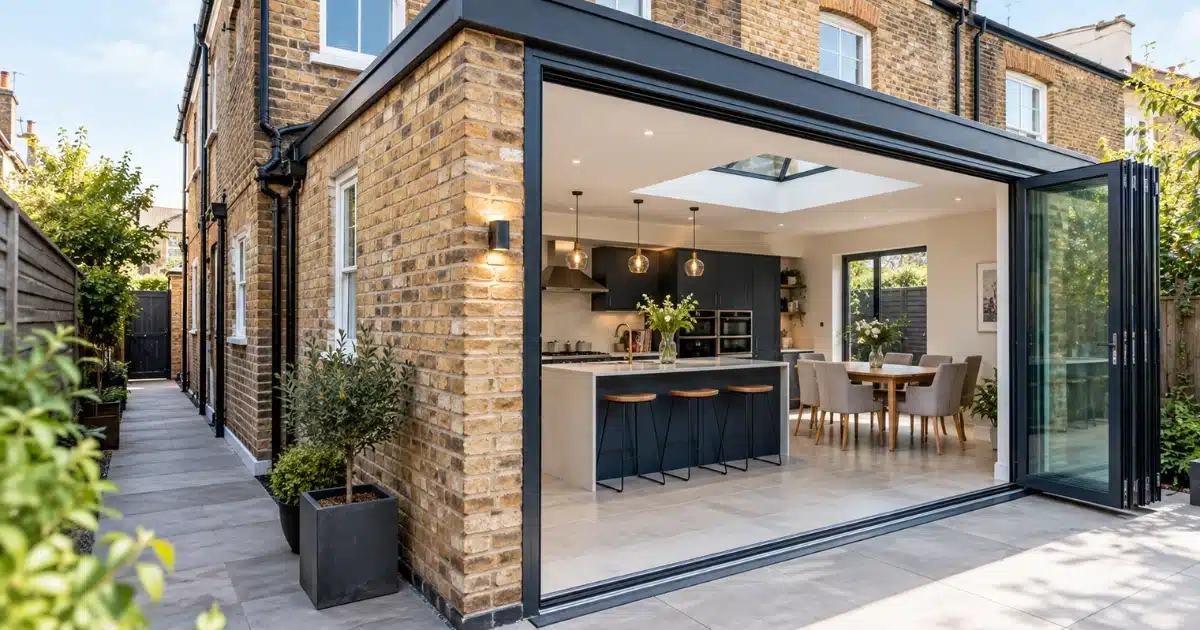
A side return extension is particularly common on Victorian and Edwardian terraced houses.
It uses the narrow side passage beside the property to create additional internal space, often making the kitchen and dining area significantly more practical.
Costs can vary widely, but a side return extension can commonly fall within the £40,000 to £80,000+ range depending on the design and specification.
How Much Does a Wraparound Extension Cost?
A wraparound extension combines a rear extension with a side return to create a larger increase in floor space.
Because it involves more construction, foundations, roofing, glazing and internal work, it normally costs more than a straightforward rear extension.
A realistic budget can often start around £60,000 and exceed £100,000, particularly for larger London projects with premium finishes.
What Is Included in the Cost of an Extension?
When comparing extension prices, make sure you understand exactly what the quotation includes.
A complete project may involve:
- Site preparation and groundworks.
- Foundations.
- External and internal walls.
- Structural steelwork where required.
- Roofing.
- Windows and external doors.
- Insulation.
- Plumbing.
- Electrical installation.
- Plastering.
- Flooring.
- Heating.
- Lighting.
- Decorating.
- Kitchen or bathroom installation where applicable.
- Connection to the existing house.
- Waste removal and site clearance.
Some quotations may exclude professional fees, finishes or certain internal works, so always check the scope before comparing prices.
How Much Do Extension Foundations Cost?
Foundation costs depend on the ground conditions, extension size and structural requirements.
Standard foundations may be relatively straightforward, but difficult ground conditions, nearby trees, drainage issues or unusual soil conditions can require additional work.
This is one reason it is difficult to provide an accurate extension price without understanding the property and proposed design.
How Much Do Extension Windows and Doors Cost?
Windows and doors can represent a significant part of the budget.
Your choice could include standard uPVC windows, aluminium frames, timber windows, bifold doors or large sliding doors.
Larger areas of glazing can improve natural light and create a stronger connection with the garden, but they can also increase the overall project cost.
Does a House Extension Require Planning Permission?
Not every extension requires a full planning application.
Some projects may fall under permitted development rights, provided they meet the relevant requirements and limitations.
However, planning permission may be required depending on the size and design of the extension, the property type, previous extensions and the location of the property.
Listed buildings and properties in certain designated areas can also have additional restrictions.
It is important to establish the planning position before committing to the construction work.
Do You Need Building Regulations Approval for an Extension?
Planning permission and building regulations are separate matters.
Even when an extension does not require planning permission, the work will generally still need to comply with Building Regulations.
These requirements cover areas such as structural stability, insulation, fire safety, ventilation, drainage and electrical safety.
Your project should be designed and constructed to meet the relevant requirements.
What Other Costs Should You Budget For?
The construction price is not necessarily the complete project cost.
You may also need to budget for:
Architectural and Design Fees
Depending on the project, you may need architectural drawings, structural calculations, surveys and other professional services.
Planning Costs
If planning permission is required, there may be application fees and associated professional costs.
Building Control
Building control approval and inspections form part of the regulatory process.
Party Wall Matters
If your extension affects a shared wall or is close to a neighbouring property, the Party Wall etc. Act 1996 may apply.
You may need a party wall surveyor depending on the circumstances.
Kitchen or Bathroom Costs
If the extension creates a new kitchen, utility room or bathroom, the cost of fixtures, fittings and installation should be included in the overall budget.
Decorating and Finishing
Plastering, flooring, painting, lighting and other finishing work can add considerably to the final cost.
How Can You Keep Extension Costs Under Control?
You do not necessarily need to choose the cheapest materials to control your budget.
Instead, focus on planning the project properly from the beginning.
- Establish a realistic budget before starting the design.
- Decide which features are essential and which are optional.
- Avoid unnecessary changes to the design once construction has started.
- Compare detailed quotations rather than headline prices.
- Choose materials that offer a sensible balance between quality and cost.
- Keep the extension design structurally straightforward where possible.
- Allow a contingency for unexpected work.
A contingency of around 10% to 15% can provide useful protection against unforeseen costs.
Is a House Extension Worth the Cost?
A well-designed extension can provide much more than additional floor space.
It can improve the way your home works, create better connections between rooms and the garden, provide additional bedrooms or bathrooms and make an existing property more suitable for your lifestyle.
It can also increase the property’s appeal and potentially its market value.
However, the financial return depends on your location, the quality of the work and the value ceiling of similar properties in your area. An expensive extension does not automatically add the same amount to a property’s resale value.
Should You Extend or Move House?
If your current home is in a location you like but lacks space, extending may be a practical alternative to moving.
Moving can involve estate agent fees, legal costs, stamp duty and the disruption of finding another property.
An extension allows you to improve the home you already own and design the additional space around your needs.
However, you should compare the expected extension cost with the likely value of the property after the work before making a decision.
How Long Does a House Extension Take?
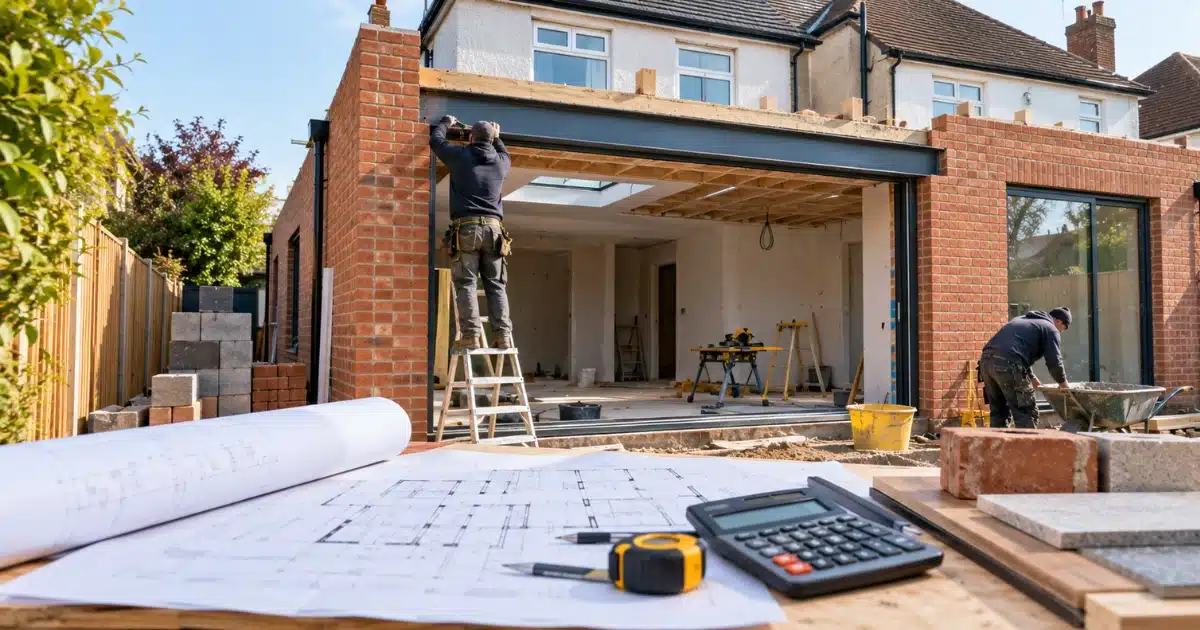
The construction stage for a typical single-storey extension can take around 10 to 16 weeks, although the complete project can take considerably longer once design, surveys, planning, building regulations and other preparation are included.
A double-storey or more complicated extension will usually take longer.
Delays can also occur because of planning decisions, material availability, unexpected structural problems or changes requested during construction.
How to Get an Accurate House Extension Cost
Online estimates are useful for establishing a starting budget, but they cannot provide an accurate price for your particular property.
For a realistic quotation, the contractor needs to understand:
- The size and type of extension.
- The existing property’s condition.
- The proposed layout.
- Structural requirements.
- Plumbing and electrical changes.
- Window and door specifications.
- Internal finishes.
- Kitchen or bathroom requirements.
- Access and site conditions.
A detailed quotation should clearly explain what is included so you can make a fair comparison between contractors.
Final Words
So, what is the cost ofa house extension in the UK?
As a broad guide, you could expect to budget from around £30,000 for a smaller, basic extension, while larger, more complex or higher-specification projects can reach £100,000 to £150,000+.
For London homeowners, it is sensible to expect higher costs in many cases.
The most important step is to avoid making decisions based solely on an online average. The size, design, property condition, materials and structural requirements can all change the final price significantly.
A properly planned extension gives you a much clearer idea of the investment before construction begins and helps prevent unexpected costs later in the project.