

The choice between a full house renovation and a partial renovation depends on your property’s condition, your budget, and your long-term goals. A full renovation completely updates the property, including multiple rooms, systems, and layouts, while a partial renovation focuses only on specific areas such as the kitchen, bathroom, or living spaces.
A full renovation is ideal for older or outdated homes that need major improvements, while a partial renovation is a better option for homeowners who only want to upgrade certain areas without carrying out a complete transformation.
Full House Renovation?
A full house renovation involves improving most or all areas of a property. It usually includes updating the interior, repairing outdated systems, improving functionality, and creating a modern living environment.
A complete renovation may involve:
- Renovating the kitchen and bathrooms.
- Replacing flooring throughout the property.
- Updating electrical and plumbing systems.
- Improving insulation and energy efficiency.
- Redesigning room layouts.
- Installing new lighting.
- Decorating the entire home.
- Carrying out structural improvements where required.
Full renovations are commonly chosen for older properties, period homes, or houses that have not been updated for many years.
Partial Renovation?
A partial renovation focuses on specific areas of the property rather than the entire home.
This approach allows homeowners to improve important spaces while keeping costs and disruption lower.
Common partial renovation projects include:
- Kitchen renovations.
- Bathroom upgrades.
- Bedroom improvements.
- Living room updates.
- Flooring replacement.
- Painting and decorating.
- Storage improvements.
A partial renovation is suitable when the overall condition of the property is good, but certain areas need improvement.
Full House Renovation vs Partial Renovation: Key Differences
| Factor | Full House Renovation | Partial Renovation |
| Scope of work | Updates most areas of the property | Focuses on selected rooms or improvements |
| Cost | Higher overall investment | Lower initial cost |
| Timeline | Takes several months depending on complexity | Usually completed faster |
| Property disruption | Greater disruption during construction | Less disruption |
| Design freedom | Allows complete transformation | Limited to specific areas |
| Best for | Older or outdated properties | Homes needing targeted improvements |
| Property value impact | Can significantly increase value | Depends on the areas improved |
When Should You Choose a Full House Renovation?
A full renovation may be the right choice if your property has multiple issues or feels outdated throughout.
Your Home Is Old or Has Not Been Updated for Years
Older homes often require several improvements at the same time, including:
- Electrical upgrades.
- Plumbing repairs.
- Better insulation.
- Modern heating systems.
- New kitchens and bathrooms.
Completing everything together can be more efficient than renovating room by room over many years.
The Layout No Longer Works for Your Lifestyle
Many older properties have layouts that do not suit modern living.
A full renovation allows you to:
- Create open-plan spaces.
- Improve room flow.
- Add storage solutions.
- Reconfigure bedrooms and living areas.
This can make the property much more practical.
You Want to Increase Property Value
A complete renovation can make a significant difference when preparing a property for sale.
Buyers often look for homes with:
- Modern kitchens.
- Updated bathrooms.
- Energy-efficient features.
- Attractive interiors.
- Functional layouts.
A fully renovated property can attract more interest in the market.
When Should You Choose a Partial Renovation?
A partial renovation may be better if your home is already in good condition but needs improvements in specific areas.
You Have a Limited Budget
Renovating one or two key areas allows you to improve your home without the cost of a complete transformation.
For example:
- Updating an outdated bathroom.
- Replacing an old kitchen.
- Refreshing interiors with new decoration.
Only Certain Rooms Need Updating
If your kitchen and bathroom are outdated but the rest of your home works well, a partial renovation may provide the improvements you need.
You Want Less Disruption
A full renovation can affect your daily routine for several months.
A partial renovation usually means:
- Fewer rooms affected.
- Shorter construction periods.
- Easier project management.
Cost Difference Between Full and Partial Renovation
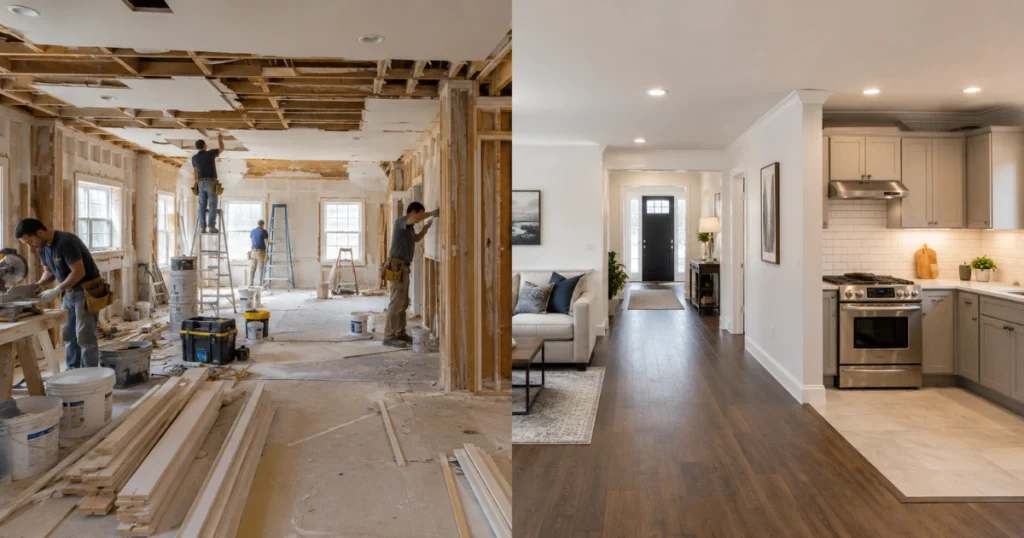
The cost depends on:
- Property size.
- Materials selected.
- Labour costs.
- Structural changes.
- Location.
- Project complexity.
Generally:
Full House Renovation
A full renovation costs more because it may involve:
- Multiple rooms.
- New systems.
- Structural work.
- More materials and labour.
Partial Renovation
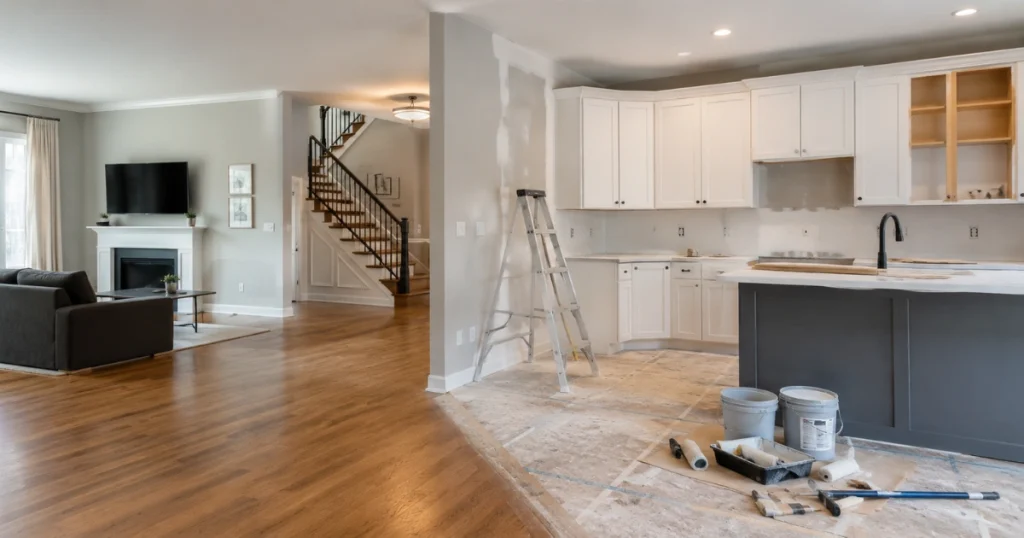
A partial renovation costs less because the work is limited to selected areas.
However, renovating multiple rooms separately over time can sometimes cost more due to repeated labour and preparation costs.
Which Option Adds More Value to Your Home?
Both options can increase property value, but the impact depends on the quality and type of improvements.
Full Renovation Value Improvements
A complete renovation can add value through:
- Improved layouts.
- Modern interiors.
- Better energy efficiency.
- New kitchens and bathrooms.
- Increased buyer appeal.
Partial Renovation Value Improvements
Certain targeted upgrades can also provide excellent returns, especially:
- Kitchen renovations.
- Bathroom renovations.
- Loft conversions.
- Fresh decoration.
- Flooring improvements.
Can You Combine Full and Partial Renovation?
Yes. Many homeowners choose a phased approach.
For example:
Phase 1:
- Renovate the kitchen.
- Upgrade the bathroom.
- Improve electrical systems.
Phase 2:
- Update bedrooms.
- Replace flooring.
- Complete decorating work.
This allows homeowners to spread costs while gradually improving the property.
Common Mistakes to Avoid
Whether choosing a full or partial renovation, avoid:
- Starting without a clear plan.
- Underestimating costs.
- Choosing materials based only on price.
- Ignoring future needs.
- Hiring inexperienced contractors.
- Making design decisions without considering practicality.
Proper planning is essential for achieving the best results.
How to Decide Which Renovation Option Is Right for You?
Ask yourself these questions:
How many areas need improvement?
If most rooms require updates, a full renovation may be more cost-effective.
What is your budget?
If your budget is limited, focus on the areas that will make the biggest difference.
How long do you plan to stay?
Long-term homeowners may benefit from a complete transformation, while shorter-term owners may prefer targeted improvements.
Does the layout work?
If the layout is the main problem, a larger renovation may be needed.
Final Words
Choosing between a full house renovation and a partial renovation depends on your property’s condition, your budget, and your future plans.
A full house renovation is the best choice when you want a complete transformation, improved functionality, and long-term value. A partial renovation is ideal when you only need to upgrade specific areas while keeping costs and disruption lower.
At JP Refurbishment London, we provide professional renovation services across London, helping homeowners transform outdated properties through full house renovations, partial refurbishments, kitchen renovations, bathroom upgrades, loft conversions, and house extensions.
With careful planning and expert workmanship, we help create homes that are modern, practical, and built to last.