A loft conversion is one of the smartest ways to add space and value to your home without moving house. But no two homes are exactly the same. The roof shape, the available head height, the type of house you live in, and even the local planning rules all play a part in deciding which loft conversion will work best for you.
This guide explains the most common types of loft conversions in simple terms, what makes each one different, and which one might be the right fit for your home.
Things to Think About First
Before choosing a conversion type, it helps to understand a few key points about your home.
Head height:
The first thing to check is the height inside your loft. Measure from the top of the ceiling joists to the highest point of the roof ridge. You usually need at least 2.2 metres of clear height for a comfortable living space. If your headroom is low, some conversion types can raise the roof or change its shape to fix this.
Roof structure:
Most houses have either a traditional framed roof with rafters and purlins or a modern truss roof. Traditional rafter roofs are easier and cheaper to convert because the open space inside is already there. Truss roofs need extra structural support, which can increase the cost and complexity.
House type:
Whether you live in a terraced house, a semi-detached house, a detached house or a bungalow will narrow down your options. Some conversion types suit certain styles of house much better than others.
Planning permission:
Many loft conversions fall under permitted development, meaning you do not need a full planning application. However, there are limits on volume, height and design. If your home is in a conservation area or is listed, or you need to change the roof shape significantly, you may need planning permission. Always check this early.
Budget:
Costs vary widely. A simple roof-light conversion costs far less than a mansard conversion. Knowing how much you are willing to spend will help you focus on realistic options.
The Main Types of Loft Conversion
Below are the most common loft conversion types, explained simply.
1. Roof Light (Velux) Conversion
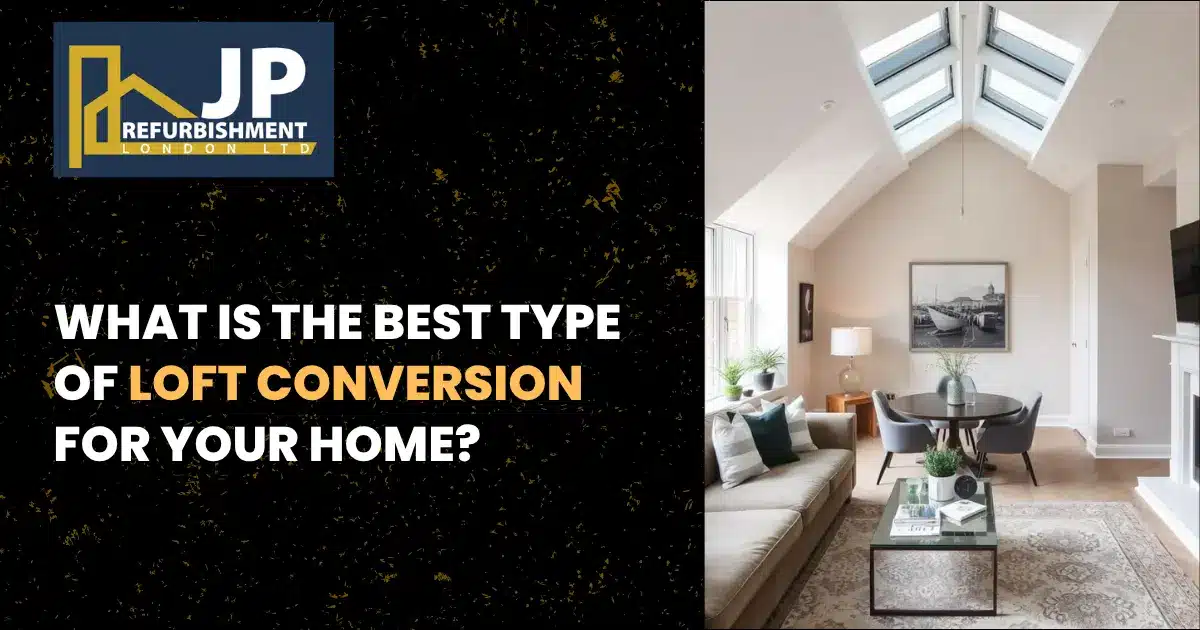
A roof light conversion is the simplest and most affordable option. The existing roof shape is not changed at all. The inside of the loft is insulated, reinforced and fitted with windows that sit flush with the roof slope. A staircase is added for access.
Best for: Homes with plenty of existing head height and roof space, where you do not need extra floor area.
Pros:
- Usually does not require planning permission.
- Quickest to build and least disruptive.
- Lower cost than other types.
- Works well in most house types.
Cons:
- Does not add any extra floor space or headroom. What you see is what you get.
- Sloping ceilings can limit furniture placement.
If your loft already feels roomy and you just want to turn it into a usable bedroom, home office or playroom, this is often the best choice.
2. Dormer Conversion
A dormer is a box-shaped structure that projects out from the slope of the roof. It has vertical walls and a flat roof, which creates more floor space and full head height across a much larger area. Dormers are usually built at the rear of the house.
Best for: Homes where the existing loft space is too narrow or too low, particularly terraced and semi-detached houses.
Pros:
- Adds significant usable floor space and headroom.
- Straight walls make furniture placement easy.
- Can include windows, French doors or even a small balcony.
- Often falls under permitted development if built to the rear.
Cons:
- More expensive than a simple roof light conversion.
- Changes the external look of the house.
- A large flat-roof dormer may need planning permission in some areas.
A single rear dormer is one of the most popular choices for Victorian and Edwardian terraced houses, giving a generous master bedroom with enough space for an en-suite.
3. Hip-to-Gable Conversion
Some houses have a hipped roof, where the roof slopes inwards on all three sides. A hip-to-gable conversion extends the sloping sidewall vertically to create a new gable end. This fills in the “missing” corner of the loft and makes the internal space much larger.
Best for: Semi-detached or detached houses with a hipped roof, where the side slope eats into usable space.
Pros:
- Makes the loft feel much bigger and more open.
- Often combined with a rear dormer for maximum space.
- Straight internal walls make the room feel like a normal room.
Cons:
- Changes the look of the house from the side.
- May require planning permission, especially if it faces a road.
- Only possible on houses with a hipped roof.
This conversion type is common on 1930s semi-detached houses, where the side slope often limits the useable floor area at one end of the loft.
4. Mansard Conversion
A mansard conversion alters the entire roof profile. The sloping side of the roof is replaced with a near-vertical wall and a shallow sloping roof on top. This creates a full-height room right across the entire footprint of the house. Dormer windows are often built into the new roof slope.
Best for: Older urban properties, terraced houses in cities, and situations where maximum space is a priority.
Pros:
- Provides the largest possible usable room.
- Can be designed to match the period style of the house.
- Works well on houses with very steep or complicated existing roofs.
Cons:
- Almost always needs planning permission.
- The most expensive type of loft conversion.
- A major building project that takes longer to complete.
A mansard is often seen on Georgian and Victorian houses. It adds a full extra floor and can turn a two-storey house into three storeys without changing the ground floor footprint.
5. L-Shaped Dormer Conversion
Some Victorian or Edwardian houses have a rear extension on the ground floor. An L-shaped dormer connects a dormer on the main roof with a dormer on the rear extension roof, forming an “L” shape. This creates two connected spaces that can be divided into multiple rooms.
Best for: Terraced or semi-detached houses with a rear addition, where you want to create two separate rooms, such as a bedroom and a bathroom.
Pros:
- Very flexible layout.
- Makes good use of all available roof space.
- Can provide space for two bedrooms and a bathroom.
Cons:
- Complex design and build.
- Usually needs planning permission.
- More expensive than a single dormer.
This type gives a great solution when you need more than just one room without extending the footprint of the house any further.
Which Type Is Best for You?
The “best” loft conversion depends entirely on your specific situation. Here is a simple way to look at it:
- You want a simple, affordable extra room, and your loft already has good height. → A roof light (Velux) conversion is likely the best fit.
- Your loft feels cramped and lacks headroom, and you live in a terraced or semi-detached house. → A rear dormer will open up the space and give you a proper room.
- You have a semi-detached or detached house with a hipped roof, and the side slope wastes a lot of space. → A hip-to-gable conversion, possibly with a rear dormer added, will transform the loft.
- You live in a period townhouse and want the absolute maximum living space, and you are prepared for a bigger project. → A mansard conversion gives you a full extra floor.
- You have a rear extension and need to create two rooms or a suite. → An L-shaped dormer is designed for exactly this situation.